Europe’s energy transition is shaped by uncertainty, from technological progress and societal change to geopolitics and economic dynamics. To support robust long-term planning, the iDesignRES project develops a set of Energy Vision Scenarios exploring how Europe’s energy system could evolve towards 2060. These scenarios are not predictions but structured plausible future pathways that help decision-makers to test strategies under different conditions. Each scenario reflects alternative assumptions about:
By comparing these contrasting futures, iDesignRES provides a transparent framework to assess how different choices and external conditions could shape Europe’s path to climate neutrality. The scenarios serve as a bridge between qualitative visions of the future and detailed quantitative modelling, supporting more resilient and informed energy planning.
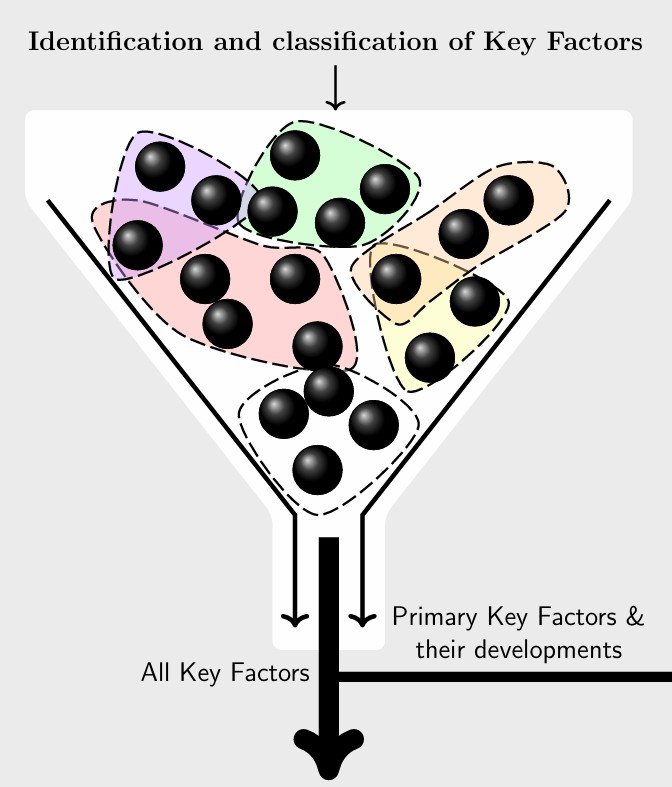
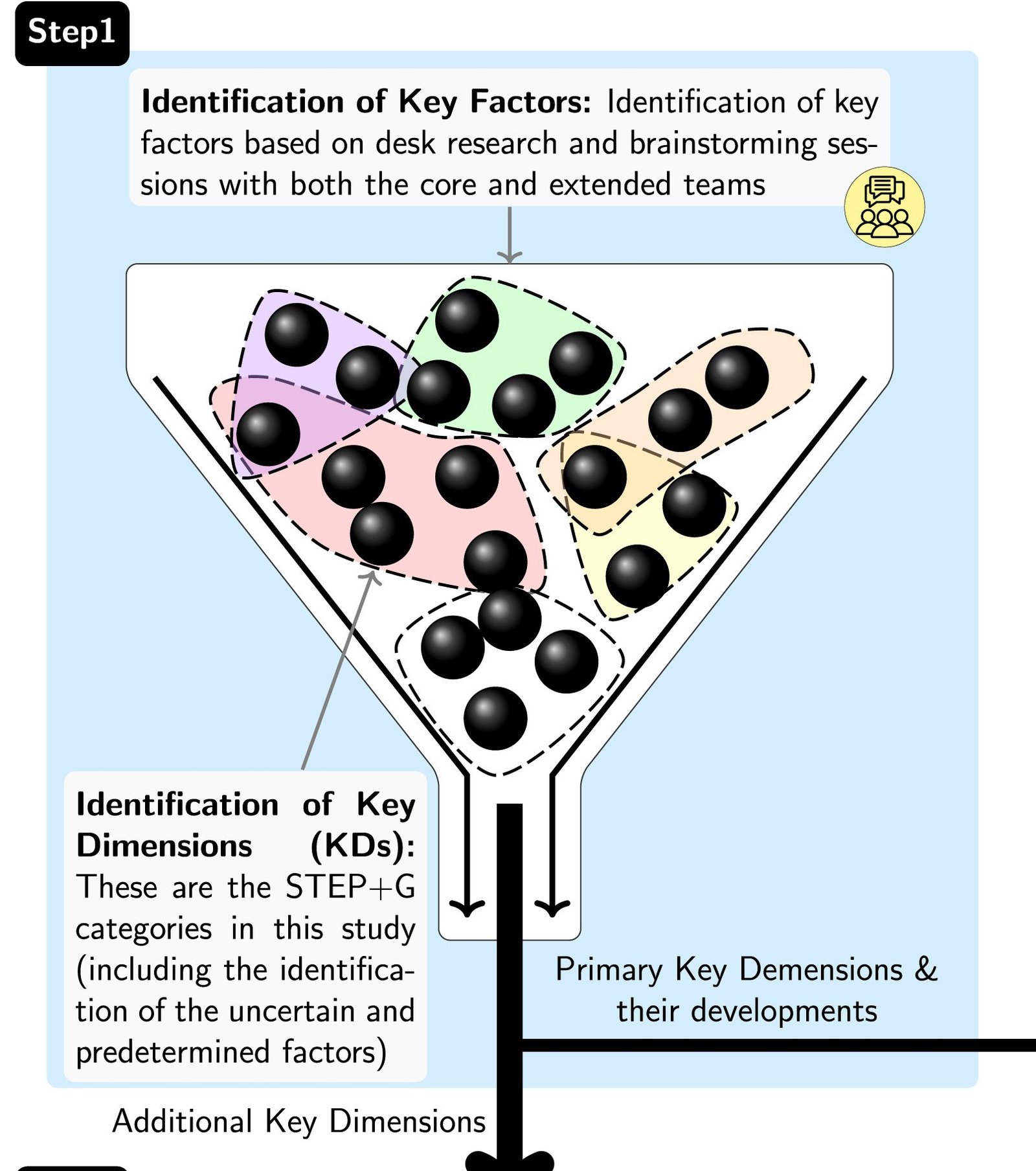
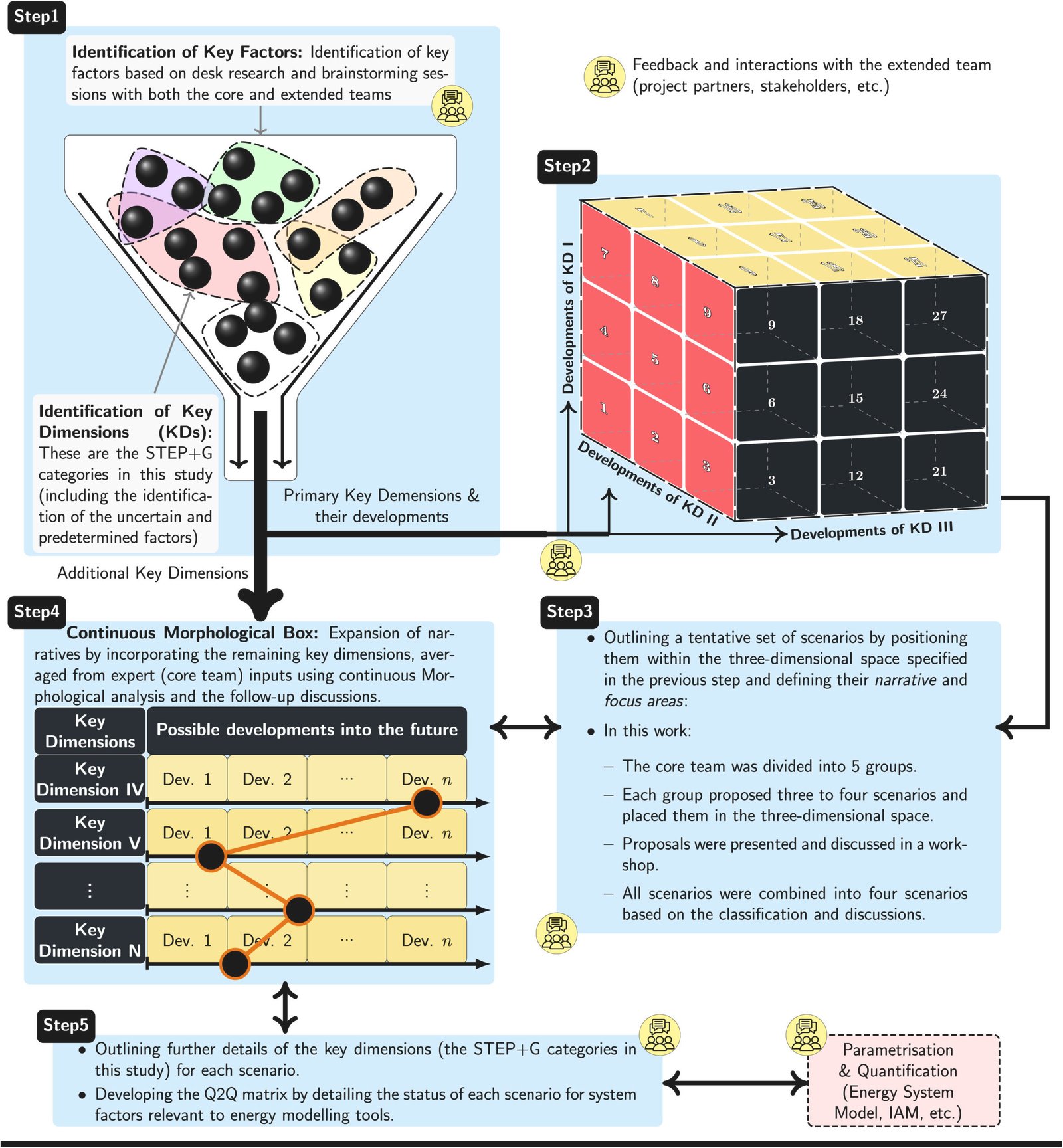
To understand what could influence Europe’s long-term energy transition, the first step was to map out all factors that may significantly affect future developments, encompassing both uncertainties and determinants.
To do so, partners performed literature review and organised brainstorming sessions were key questions opened the discussions on the factors. For example: What key factors influence the long-term demand projections in Europe (electricity, heat, and transportation)? What key factors influence the future technology investment/operational costs in the European energy systems? What key factors influence the availability of import/exports related to energy systems from/to Europe in the future?
After identifying the key factors through brainstorming and literature review, these were classified into
specific groups based on STEP analysis – Social, Technological, Economic, and Political – that we extended with Geopolitics (becoming STEP+G):
S — Social: awareness, behaviours, acceptance of new technologies and policies
T — Technological: pace of innovation and deployment of emerging solutions
E — Economic: investment capacity, funding mechanisms, market incentives
P — Political: regulatory ambition, policy stability, lobbying influences
+ G — Geopolitics: global tensions impacting energy security and imports/exports
This structured approach ensured that no key dimension was overlooked and that interdependencies were visible from the outset. It created a shared understanding of the main uncertainties that will shape possible transition pathways and guided the following steps of the scenario process.
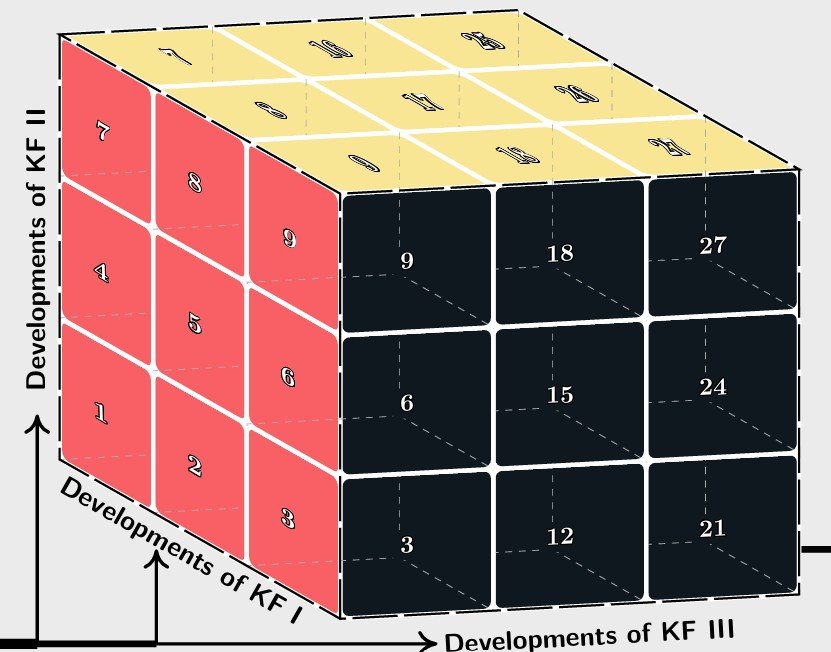
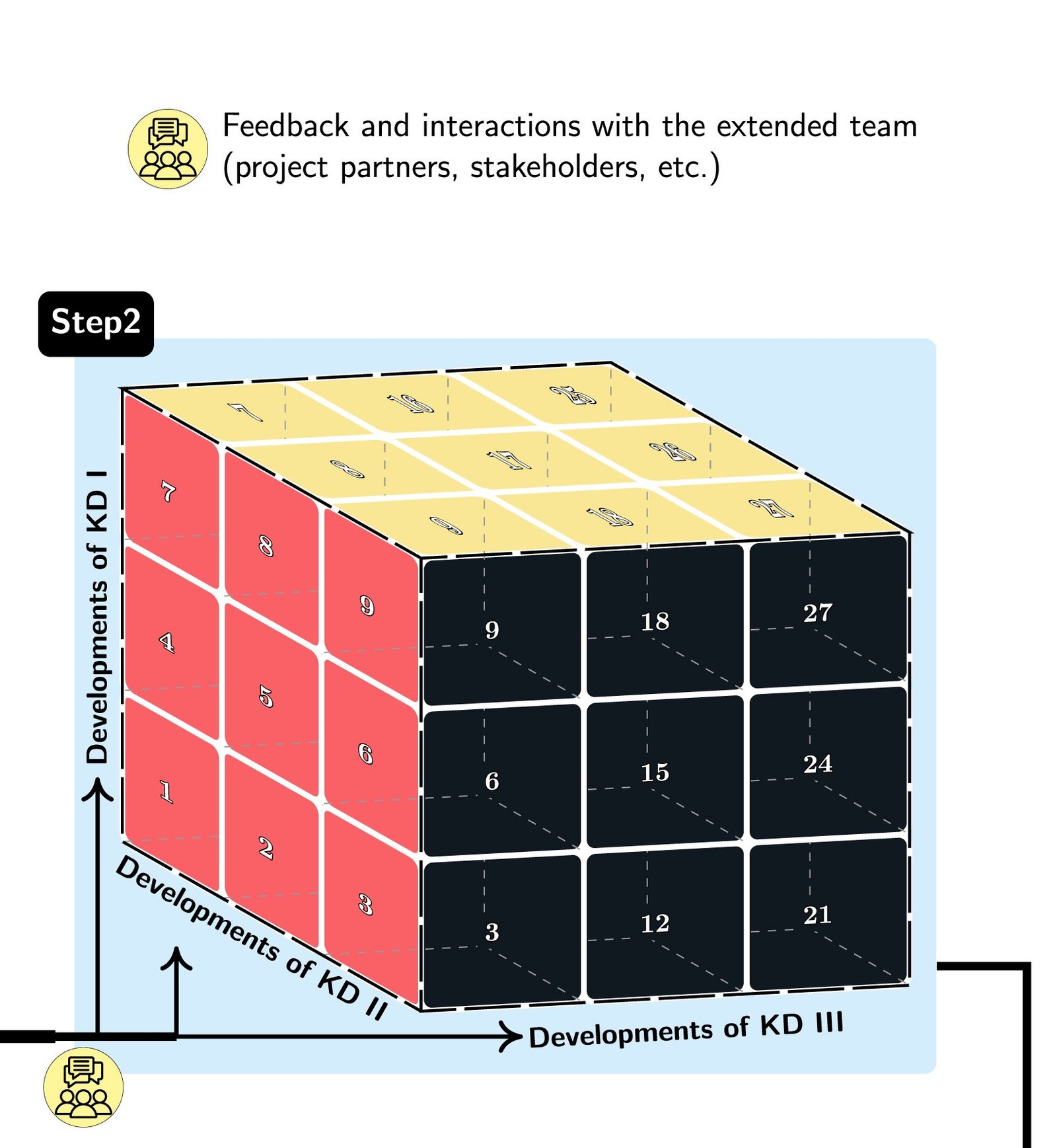
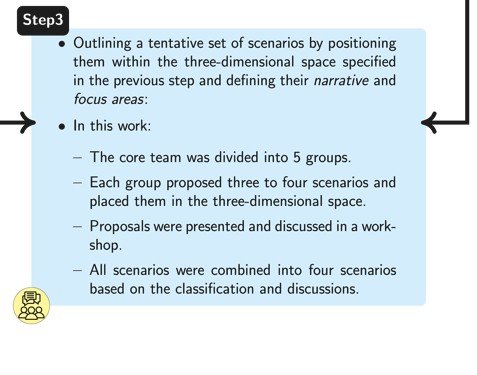
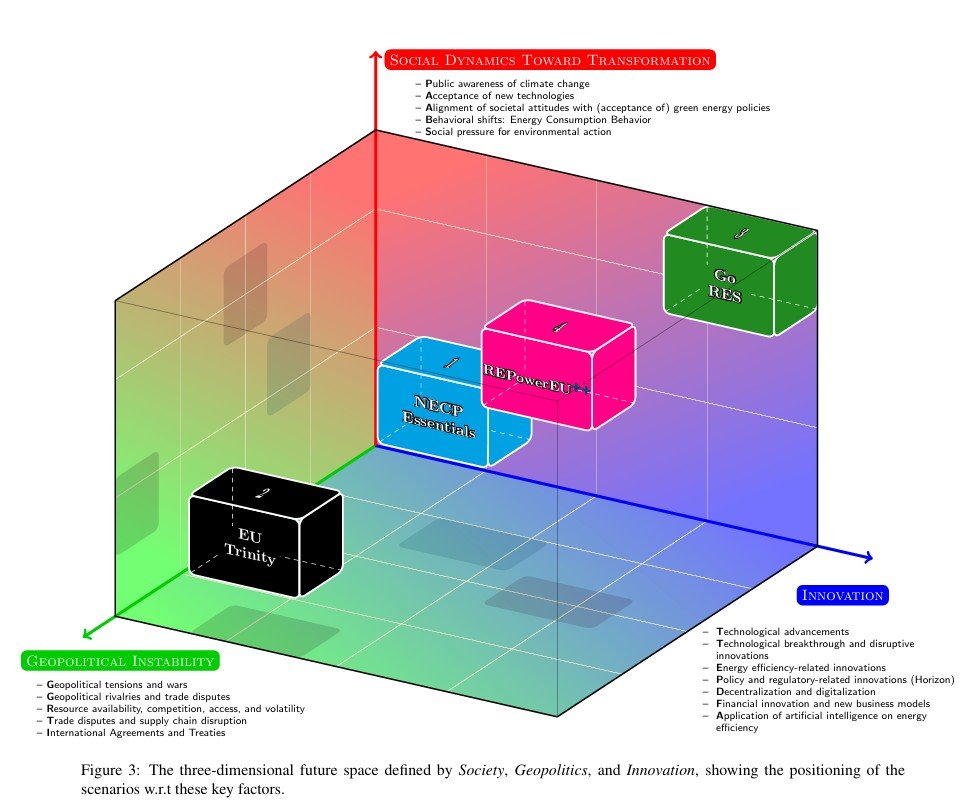
In the second step, the initial focus was limited to three key uncertainties to develop the narratives and focus areas of the scenarios. The limitation was intended to limit the state space of the possible scenarios, facilitating the group discussions to reach a consensus on the overall picture of the scenarios. The three following uncertainties were considered as the primary key factors: ‘Social dynamics toward transformation’, ‘innovation’, and ‘geopolitical instability’.
For each of them, three potential future developments were identified, which led to an overall of 27 potential scenarios when combined. Each team selected a few relevant options and drafted short narratives, which were then merged into a coherent set, ensuring that the scenarios were realistic, distinct, and covered both challenging and favourable futures.
This process led to four contrasting scenarios:
1. Current Trends: Continuation of current trends without major change (NECP Essentials)
2. Pessimistic Scenario: Challenges or negative developments of the key factors (EU Trinity)
3. Optimistic Scenario: Positive developments of the key factors (Go RES)
4. Paradigm Shift Scenario: A partially explorative scenario, i.e., how to reach energy independence in the EU (REPowerEU++).
The following figure illustrates the positioning of these scenarios within the three-dimensional future space defined by the primary key factors.
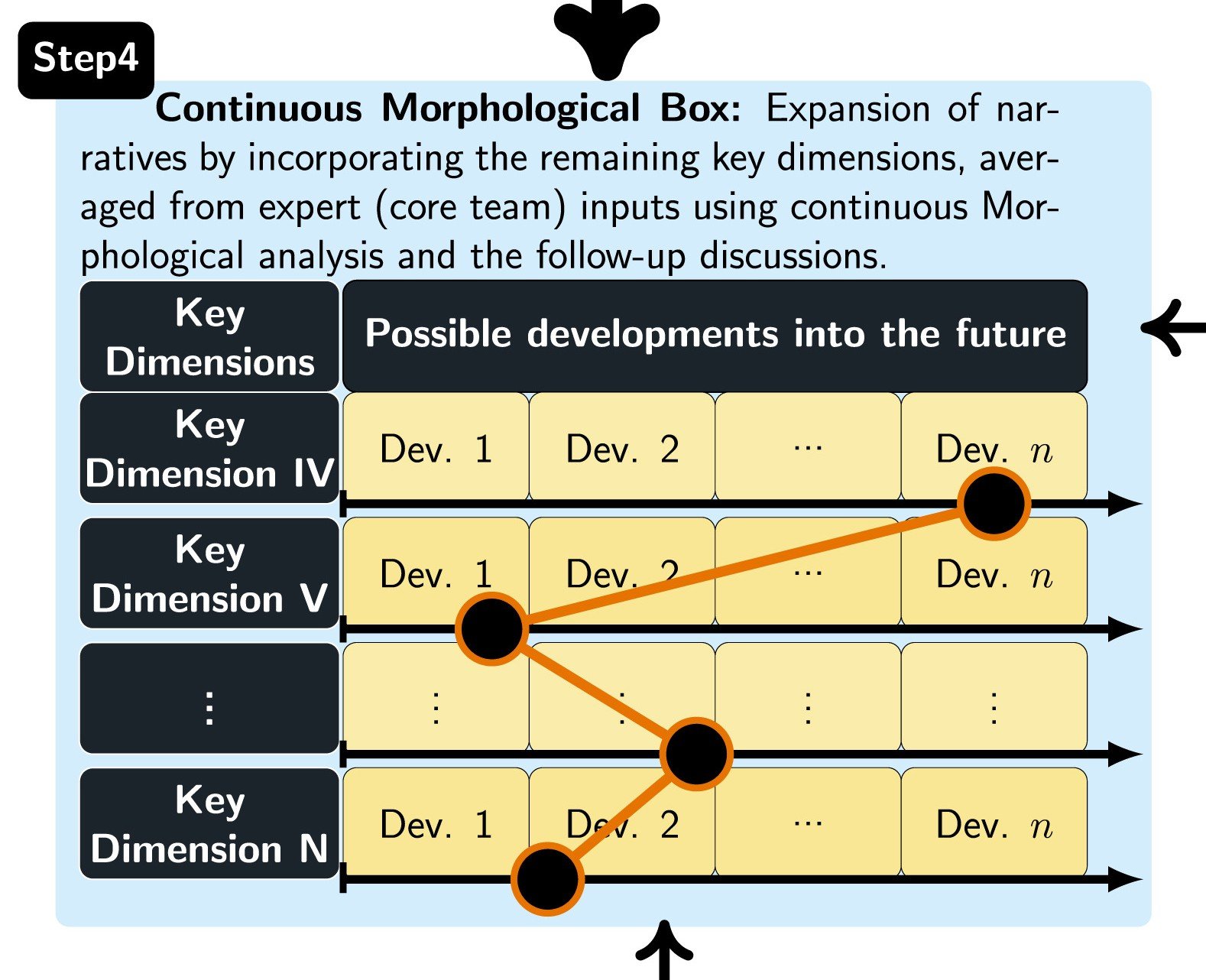
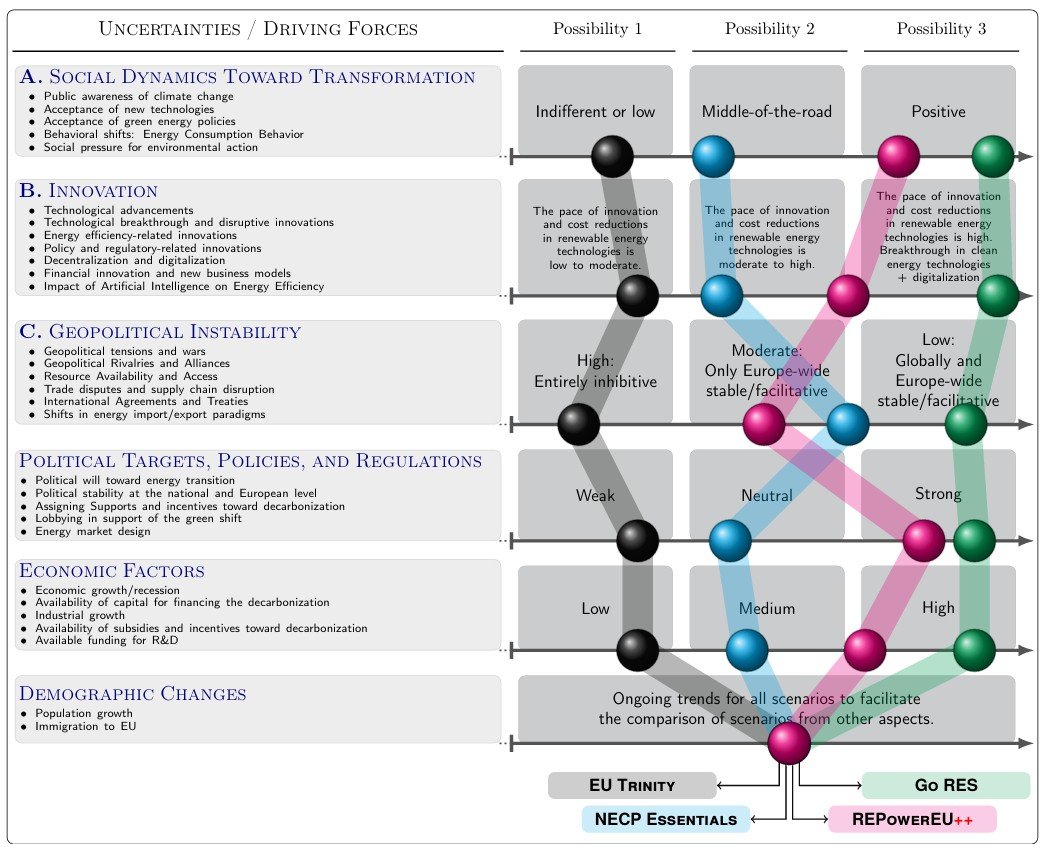
Once the initial narratives were defined, the remaining influencing factors also needed explicit assumptions to enable quantitative modelling. Even if only a few key uncertainties drive the scenario design, other elements such as policies, economic trends, or demographics still affect the outcomes.
To ensure internal coherence across the scenarios:
• The evolution of the additional influencing factors was examined for each scenario.
• Logical consistency was checked. For example, strong societal demand for climate action cannot coexist with weak political ambition.
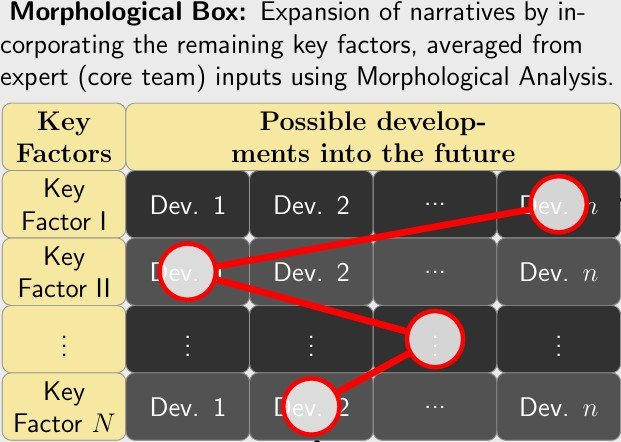
A morphological analysis was used for this purpose. Different groups suggested possible developments for the remaining factors, their proposals were compared and aligned, and a consistent set of assumptions was established for every scenario.
This step ensures that the qualitative narratives contain all necessary assumptions and can be translated into quantifiable scenario inputs without ambiguity.

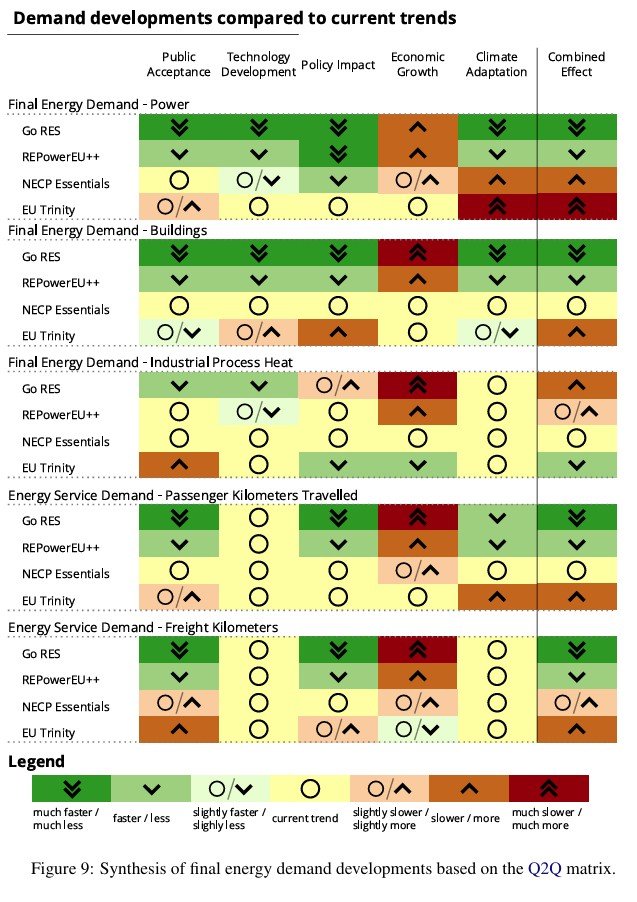
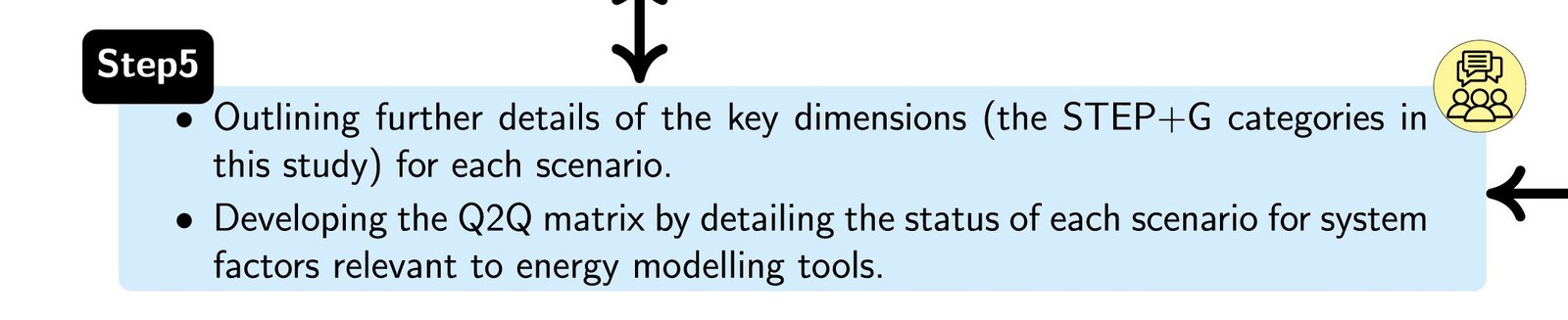
After defining the scenario narratives, the broad driving forces were translated into detailed quantitative assumptions using a Qualitative to Quantitative (Q2Q) matrix. This matrix expands the high-level storyline into concrete parameters for modelling the energy system.
For example, narrative might describe innovation as moderate technological development. This aspect is further detailed in the Q2Q matrix with projections on the availability and costs of various technologies such as onshore wind turbines.
The Q2Q matrix has the advantage of (i) facilitating and systematising the quantification process and (ii) enhancing the clarity and readability of the qualitative scenarios.
The process is not strictly linear. Insights gained during quantification can lead to adjustments in the qualitative descriptions, and the matrix is refined accordingly. This iterative approach ensures that both narrative and numbers remain aligned and coherent.
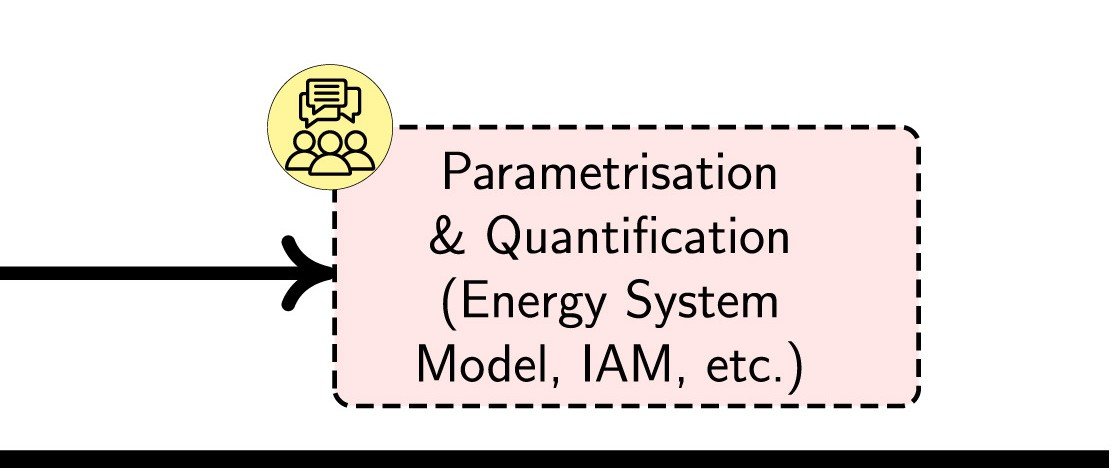
The quantification of the EU EnVis-2060 storylines was performed in a two-step approach: first, the qualitative storylines were taken and parametrized using the Q2Q matrix, as well as the overall descriptions. Second, the created parameter sets were fed into the open-source energy system model GENeSYS-MOD.
a. Parametrization
Data points were selected from the literature in line with the trends defined in each scenario. Where data was scarce, estimates from other models or expert sources were used.
Demand projections started from 2018 statistics and were adjusted according to historic patterns and the scenario-specific assumptions from the storylines. These inputs formed the basis for the modelling phase.
b. Energy system modelling with GENeSYS-MOD
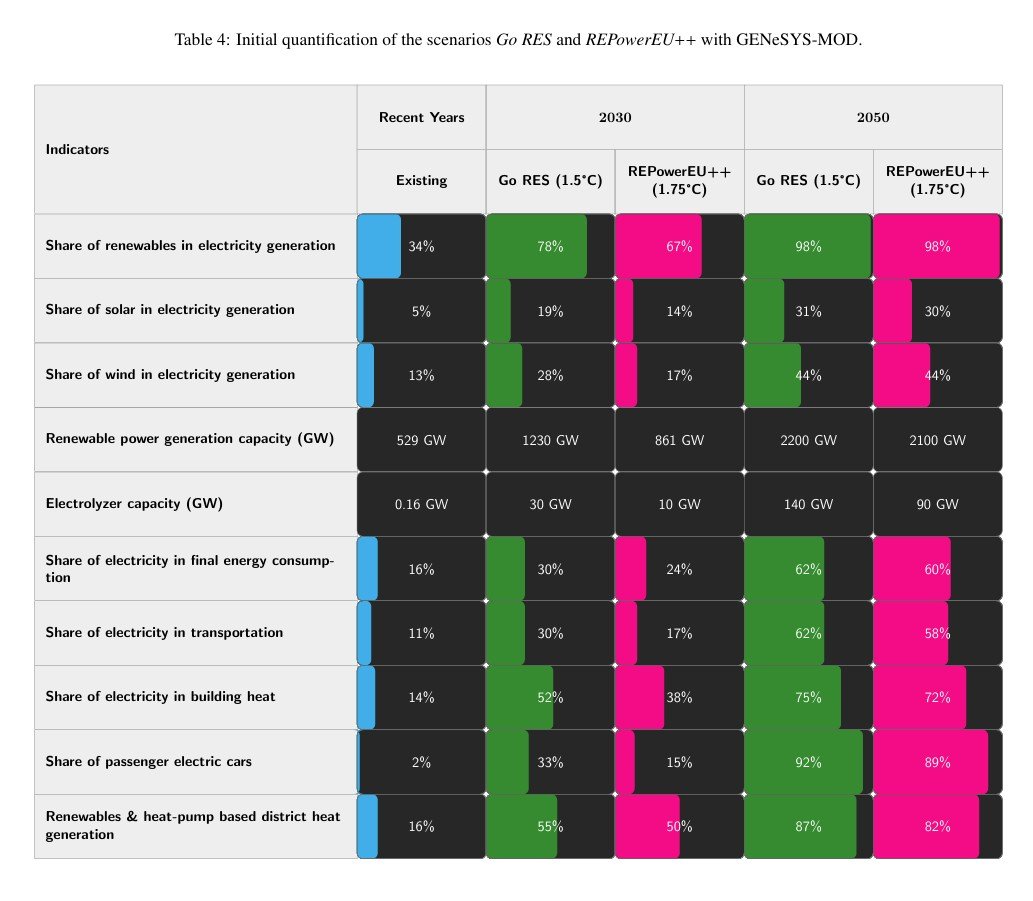
GENeSYS-MOD then calculated the long-term evolution of Europe’s energy system up to 2060, identifying required capacities, energy flows and flexibility needs for each scenario.
The first results show the scale of effort required in the more ambitious pathways, especially the rapid expansion of renewable energy and hydrogen infrastructure. Current electrolyser capacities, for instance, fall far short of what the most ambitious scenarios demand.